



It’s autumn already in the rest of the world. We are late in the season business sans summers, which comes galloping towards us every year. The rest of the seasons take their own sweet time in arriving, ambling towards us at a leisurely pace. Sigh..
Every year between mid-September and early October, the Chinese celebrate the Mid-Autumn festival or the Moon festival or the Moon cake festival. All the names are suggestive of what the festival entails. The festival is celebrated on the 5th day of the 8th lunar Chinese month, hence the name Mid-Autumn festival. Also the moon is believed to be the brightest and the fullest on this day so people come together to engage in moon gazing and moon worshiping activities, therefore, earning the name Moon festival.
I took a particular liking to this festival because of its highlight; the moon cakes!! And also because it’s more laid back as far as the excitement levels are concerned, but don’t get me wrong, it’s a big occasion nonetheless. Analogically speaking it’s akin to our Big Eid.
Folklore has it that an uprising against the Mongol rulers of China was initiated by the Ming revolutionaries, by smuggling messages inside the moon cakes and a successful revolt took place on the 15th day of the 8th lunar month. Another method which is believed to have been employed was to print hidden messages on the surface of the moon cakes, which came in packages of four. To read the message, each of the four moon cakes was cut into four equal parts. The resulting 16 pieces were pieced together like a puzzle to reveal the hidden message. The pieces of the moon cakes were then eaten to destroy it. What a novel technique!

I am hoping to have aroused your curiosity to the point where you are asking yourselves: what exactly is a moon cake? Moon cakes are traditional, Chinese, round, thick caramel-colored pastries with dense filling inside. The filling in the center is usually of single or double salted egg yolks of duck eggs. The egg yolks symbolize the full moon. Other conventional fillings are the red bean paste and the lotus seed paste, with the latter being my personal favorite. The cakes have inscriptions on top of them. Because of its dense and rich consistency, one piece into 6-8 wedges and then shared among the same number of people.

Whereas, my hierarchy of needs dictates that the whole thing should be devoured and I did just that every time. Except for the inscriptions on top, they might seem very unassuming and old fashioned but they can weigh heavy on the pocket, with prices ranging from Singapore $25 to $100 or above per piece.
Moon cakes are given as gifts to family, friends and corporate associates. In Singapore, it has become a hallmark tradition to present the moon cakes in fancy and ornately crafted boxes, which can further spike up the price. Eateries and hotels step up the game ever year to make the containers more appealing and elaborate than the previous year.
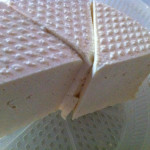
Catering to the health conscious crowds of today, less heavy versions have been developed. One of which is the snow-skin moon cake, which is made of glutinous rice. Typically it’s white in color and is eaten cold, which is how it gets its name ‘snow skin.’ It comes in other soft pastel colors with varied fillings.

I saw cheaper versions of it in Islamabad, while visiting a Chinese grocery store. They didn’t seem particularly inviting, especially since having sampled one of the best. Guess a mid-autumn trip to Singapore for me is on the cards..
Scheherazade Khattak

I am a self-taught cook, with of course lots of help and encouragement from my mommy and a tremendous amount of support from my hubby. Cooking is cathartic for me; it relaxes me and the sense of achievement I get after a well cooked meal is second-to-none. Teamed up with my love for reading and writing,its pure joy. Most of my recipes are my mother’s -she is my greatest inspiration and go-to person for culinary emergencies (we all have them, don’t we?)- and from magazines such as Good Housekeeping and Hello. Having spent a couple of years in South-east Asia, (read Singapore and Malaysia), I caught a very oriental bug. Which is…which is… well its using my cell phone to take snaps of the meals I am about to gobble up. In my defense, it’s strictly limited to my travels abroad. For that, I have dedicated a picture blog called ‘Food Casserole.’